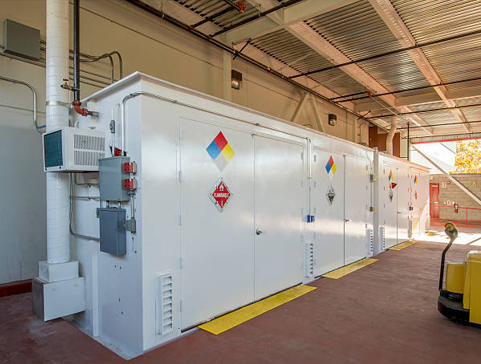
Importance of Ultra Low Humidity in Battery Production
Lithium battery manufacturing requires highly controlled environmental conditions to maintain chemical stability, product reliability, and operational safety. Among all environmental factors, humidity control is one of the most critical. Even small traces of moisture can interfere with sensitive battery components and affect overall cell performance. For this reason, modern battery facilities rely on precision engineered dry room environments that maintain extremely low dew point levels throughout production areas.
Advanced Lithium Battery Dry Rooms are specifically designed to deliver ultra low humidity conditions required during electrode preparation, cell assembly, and electrolyte filling processes. These controlled environments integrate desiccant based dehumidification systems, airtight structural design, and automated monitoring technologies. The objective is to ensure stable and consistent atmospheric conditions that protect moisture sensitive materials and maintain production efficiency.
Why Moisture Control Is Critical for Lithium Batteries
Lithium battery components react easily with moisture. Exposure to humidity can result in unwanted chemical reactions that compromise material integrity and reduce performance consistency. Maintaining ultra low humidity prevents such interactions and safeguards product quality.
Stable humidity levels also contribute to predictable production processes. When environmental variables remain within strict limits, manufacturing operations proceed smoothly without unexpected deviations. This consistency enhances overall operational control and reduces the likelihood of quality variations.
Core Objectives of Lithium Battery Dry Room Systems
An effective lithium battery dry room system is designed to achieve the following objectives:
• Maintain ultra low dew point temperatures suitable for sensitive assembly stages
• Provide uniform airflow to eliminate localized humidity variations
• Support continuous operation with optimized energy efficiency
These objectives ensure both environmental stability and long term production reliability.
Engineering Design of Advanced Dry Room Systems
Battery dry rooms are engineered to achieve precise environmental control across large manufacturing facilities. Unlike conventional air conditioning systems, these environments are specifically tailored to meet the ultra low humidity requirements of lithium battery production.
Airtight construction plays a vital role in maintaining internal environmental conditions. Walls, ceilings, and flooring are designed with high grade insulation and vapor barriers to minimize external moisture infiltration. Pressure balancing systems further prevent humid air from entering the controlled space. Proper structural integrity ensures that ultra low humidity levels remain stable over extended periods.
See also: Digital Identity Technology Explained
Role of Desiccant Based Dehumidification
Desiccant technology forms the backbone of lithium battery dry room systems. These systems remove moisture directly from the air by passing it through hygroscopic materials that absorb water vapor. The desiccant material is regenerated using a controlled heating cycle, allowing continuous moisture removal without interruption.
A high performance Low dew point dehumidifier is essential for achieving and sustaining the extremely low moisture levels required in battery manufacturing. These systems are engineered to operate efficiently while delivering precise dew point control. Their advanced design enables consistent humidity regulation even in large scale production facilities with substantial air volumes.
Airflow Distribution and Environmental Monitoring
Uniform airflow management ensures consistent environmental conditions throughout the dry room. Advanced air handling units distribute conditioned air evenly, preventing moisture concentration in specific zones. Balanced airflow is critical for maintaining homogeneous humidity levels across all workstations.
Modern dry rooms incorporate automated environmental monitoring systems that track key performance parameters in real time. These systems measure dew point, relative humidity, temperature, and air pressure to maintain precise control. Automated adjustments help maintain stable conditions and enhance overall system reliability.
Key parameters typically monitored include:
• Dew point stability across the facility
• Relative humidity consistency within defined limits
• Positive pressure control to prevent moisture intrusion
Continuous monitoring improves operational transparency and supports preventive maintenance planning.
Operational Benefits of Lithium Battery Dry Rooms
Implementing a dedicated dry room environment provides substantial operational advantages. Maintaining ultra low humidity protects moisture sensitive materials from degradation and ensures chemical stability during production. Controlled environmental conditions enhance consistency and reduce the risk of manufacturing irregularities.
Stable humidity levels also improve production efficiency. When atmospheric variables remain controlled, assembly processes can proceed without disruption. This predictability strengthens workflow coordination and supports higher output performance.
Energy Efficiency and System Durability
Advanced dry room systems are designed to balance high performance with energy efficiency. Optimized airflow design and heat recovery mechanisms reduce power consumption while maintaining strict humidity control standards. Efficient energy utilization contributes to long term cost management and sustainable manufacturing practices.
Durability is another key advantage. Industrial grade components and engineered structural elements ensure long lasting performance. Integrated diagnostics and preventive maintenance programs further enhance reliability by identifying potential issues before they affect production.
Supporting Quality Standards and Compliance
Lithium battery production operates under stringent quality and safety guidelines. Maintaining documented environmental conditions is essential for compliance with industry standards. Controlled dry room environments provide continuous data logging and monitoring capabilities that support regulatory requirements.
Consistent environmental management strengthens internal quality assurance systems. Reduced variability in humidity and temperature enhances product uniformity and long term reliability. A structured dry room strategy therefore contributes directly to improved quality control outcomes.
Scalability and Future Ready Infrastructure
As global demand for lithium batteries continues to grow, manufacturing facilities must expand production capacity while maintaining strict environmental control. Dry room systems designed with modular and scalable configurations allow phased expansion without compromising humidity stability. Flexible architecture ensures that environmental performance remains consistent even as production volumes increase.
Integration with centralized building management systems enhances coordinated control of dehumidification, airflow, and temperature regulation. Automated synchronization across systems simplifies oversight and improves overall operational efficiency.
Selecting an experienced manufacturer ensures that dry room systems are properly engineered and optimized for specific production requirements. Comprehensive design support and technical expertise contribute to long term operational success.
Conclusion
High efficiency lithium battery dry rooms are essential for maintaining precision, safety, and reliability in modern battery manufacturing. Ultra low humidity environments protect sensitive components, stabilize chemical processes, and support consistent production performance. By integrating desiccant based dehumidification, airtight construction, and intelligent monitoring systems, dry rooms create the controlled atmosphere necessary for advanced battery assembly.
Energy efficient design, scalable system architecture, and continuous environmental monitoring ensure sustainable and dependable operations. Partnering with a trusted provider such as Bry-Air offers access to specialized expertise and advanced dry room solutions tailored to lithium battery manufacturing needs. Investing in precision humidity control strengthens quality assurance, enhances operational efficiency, and supports the long term growth of battery production capabilities.