You brush, you try to limit sugar, you remind your kids to rinse after snacks, and somehow a routine checkup still turns into a conversation about cavities, gum irritation, or worn enamel. That can feel frustrating, especially when you thought you were doing enough. Most oral problems do not begin with one big mistake. They build slowly through small habits, missed signs, and confusion about what actually works. In some cases, people later explore South Reno dental implant services as part of restoring long-term oral health.
That is where preventive dental education matters. Clear guidance changes daily choices, helps families catch problems earlier, and lowers the odds of pain, costly treatment, and avoidable stress. The role of preventive dental education in reducing future oral issues is simple at its core. When people know what to do, why it matters, and when to act, their mouths stay healthier for longer.
Preventive dental education changes habits before damage sets in
Many people grow up with basic advice like brush twice a day and see the dentist regularly. The trouble is that basic advice often leaves out the details that shape results. A child may brush for thirty seconds and think it counts. A parent may not realize that juice in a sippy cup can keep teeth coated in sugar. An adult may ignore bleeding gums because it does not hurt yet.
Education fills those gaps. It explains how plaque forms, why flossing reaches places a toothbrush misses, and how dry mouth, medications, diet, and grinding can raise risk. It also helps people understand that oral disease is often quiet at first. Cavities can start small. Gum disease can begin with mild redness. Enamel erosion can look harmless until sensitivity shows up months later.
That delay is what makes prevention so powerful. By the time pain arrives, the problem is often bigger and more expensive to fix. A short lesson on brushing technique or fluoride use may prevent a filling. Guidance on mouthguards may prevent a chipped tooth. Advice on early orthodontic concerns may prevent years of wear and crowding.
For children, the effect can be even stronger. According to the CDC, oral health affects eating, speaking, and learning. A child with tooth pain may struggle to focus in school, avoid certain foods, or lose sleep. Education at home, in schools, and during dental visits supports better routines before those problems take hold.
Family dentist visits work better when education is part of care
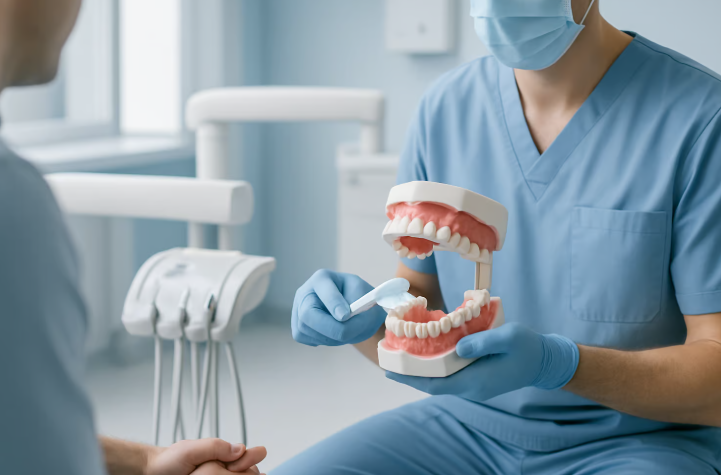
A cleaning alone does not change much if a patient goes home unsure how to care for their teeth. A family dentist does more than check for decay. Good preventive care includes showing children how to brush along the gumline, talking with teens about sports protection and sugary drinks, and helping adults understand gum recession, sensitivity, or the effect of smoking and vaping.
This is why preventive oral health education works best when it is personal. A six year old needs different guidance than a parent with crowns or a grandparent managing dry mouth from medication. Advice should fit real life. If flossing every night feels unrealistic in a busy household, the answer is not guilt. The answer is a practical plan that people will actually follow.
That plan can prevent a familiar cycle. A small cavity leads to a filling. A delayed visit turns that filling into a crown. Neglected gum inflammation becomes deeper infection. The cost rises, the visits get longer, and dental anxiety grows. Education interrupts that pattern early.
Dental prevention reduces long term cost, pain, and missed warning signs
People often think of prevention as a nice extra. It is usually the less expensive path. Daily habits supported by good instruction help reduce the need for restorations, emergency visits, and advanced gum treatment. The CDC also highlights key oral health prevention strategies, including fluoride, sealants, and regular care. These are not complicated ideas. They are small protections that add up over time.
There is also the emotional side. Oral issues can affect confidence, comfort, and routine. You may start chewing on one side, avoiding cold drinks, or putting off photos because of visible damage. When families understand what early changes look like, they are more likely to speak up before those issues become harder to manage.
| Approach | What It Looks Like | Likely Outcome Over Time |
|---|---|---|
| Limited dental education | Quick brushing, inconsistent flossing, delayed visits, confusion about diet and fluoride | Higher chance of cavities, gum problems, surprise treatment costs, and dental anxiety |
| Consistent preventive education | Proper brushing technique, age based advice, regular exams, better snack and drink choices, early symptom awareness | Fewer preventable issues, earlier treatment, lower long term cost, and better comfort |
Oral health education works best when it is simple and repeatable
People rarely need more information. They need clearer information. A child may remember to brush better when shown a timer and a mirror trick. A teen may cut back on sports drinks after learning how acid softens enamel. An adult may finally address jaw pain after hearing how grinding can wear teeth down at night.
Preventive dental care education should be repeated often because life changes. New medications, braces, pregnancy, aging, and diet shifts all affect oral health. What worked five years ago may not be enough now. Repetition is not failure. It is how healthy habits stick.
Three practical steps you can take now
1. Audit your daily routine. Time the brushing. Check the toothbrush angle. Look at whether flossing happens at all or only when food gets stuck. Small corrections in technique can matter more than adding more products.
2. Ask for specific guidance at the next visit. General advice is easy to forget. Ask what areas are being missed, whether fluoride or sealants make sense, and what early warning signs apply to your age or your child’s stage of development.
3. Build one family rule that protects teeth. Choose something realistic, such as water after sugary snacks, no bottles in bed, mouthguards for sports, or a set brushing time every night. One repeatable rule often works better than a long list of goals.
Education today can prevent bigger oral problems later
Better oral health usually starts long before treatment. It starts when you understand what your mouth needs, what your child’s habits are leading toward, and which early signs should never be brushed off. That is the quiet strength behind preventive education. It lowers risk before pain becomes the thing that gets your attention.
If you want fewer surprises at future dental visits, start with better guidance and steady habits. A trusted family dentist can help you turn that knowledge into a plan that fits your life.
