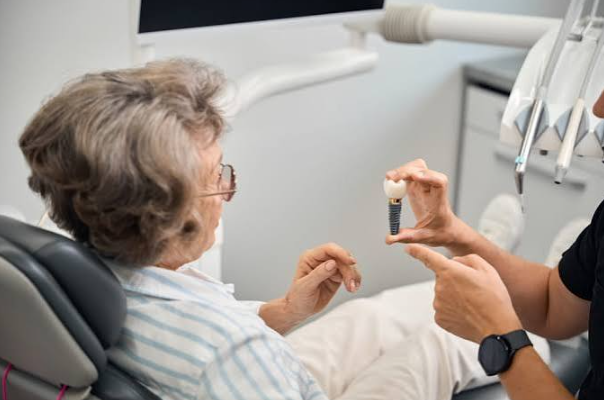
You sit in the chair expecting a crown, veneer, or bridge to feel natural right away, and when it does not, the frustration is immediate. Your bite feels off, one tooth seems to hit first, or the restoration looks fine but does not move with the rest of your mouth the way it should. That kind of problem is not just annoying. It can lead to soreness, headaches, extra adjustments, and the sinking feeling that something expensive still is not finished. This is why many people looking for family and cosmetic dental services in Hayward want restorations that fit comfortably and function properly from the start.
This is where dental articulators matter more than most people realize. These devices let a dentist and lab team test how ceramic restorations fit and function outside the mouth before final placement. In plain terms, they help simulate jaw movement, check contacts, and reduce surprises. For anyone seeing a general and cosmetic dentist for crowns, veneers, inlays, onlays, or full mouth work, that extra layer of testing can protect both comfort and appearance.
Dental articulators reduce guesswork with ceramic restorations
Ceramic restorations need more than a good shade match. They need to fit your bite. A crown that is even slightly high can change how you chew. A veneer that looks perfect on a model can still create trouble if the way your teeth glide against each other was not considered. Ceramic is strong, but it is also less forgiving when forces are wrong. If pressure is concentrated in one area, chipping, wear, or loosening can follow.
Dental articulators act like a mechanical stand in for your jaw. They hold models of your upper and lower teeth and allow the dentist or lab to study how those arches meet in different movements. Some are simple and show basic opening and closing. Others are far more precise and can simulate side to side and forward motion with much better accuracy. That matters when a restoration has to function well, not just sit in place.
A review of current evidence on dental articulators and occlusion shows that more accurate articulation methods can improve the evaluation of contacts and jaw relationships, especially in restorative cases where bite precision affects long term success. You can read more in this research on dental articulators and occlusal analysis.
See also: Certificate Lifetimes Are Shrinking: What Breaks at 47 Days
Ceramic restorations fail when bite dynamics are ignored
You may have heard that a crown is “just a cap,” but that description leaves out the hard part. A ceramic crown has to handle pressure every day, often hundreds or thousands of tooth contacts, while matching the way your jaw naturally moves. If that movement is guessed at instead of tested, the restoration may look right on the tray and feel wrong in your mouth.
That creates a chain reaction. You return for one adjustment, then another. You avoid chewing on one side. Your jaw muscles tighten because your bite is compensating. If you grind or clench, the risk climbs even higher. Small errors become expensive when they shorten the life of a restoration or force a remake.
This is why dental articulators for ceramic restorations are so useful. They let the team check contact points before cementation. They also help when several teeth are being restored at once, because the bite has to work as a system. A single crown can often be adjusted chairside. Multiple ceramic units demand more planning.
Research on all ceramic systems has also shown that material behavior, fracture resistance, and clinical performance are closely tied to design and loading conditions, not just the ceramic itself. This review of ceramic restorative materials explains why force distribution matters so much.
Articulator testing supports better planning in cosmetic and restorative dentistry
People often think cosmetic dentistry is mostly about appearance. It is not. The best cosmetic work disappears into your natural function. If you are getting veneers to improve shape and color, or crowns to rebuild worn teeth, the goal is not only a better smile. The goal is a smile that feels normal when you talk, chew, and wake up the next morning.
A skilled dentist may use facebow records, bite registrations, digital scans, photos, and articulator mounted models together. That sounds technical, but the reason is simple. Your mouth is not static. Your lower jaw does not just close straight up and down. It shifts, glides, and adapts. A restoration has to respect that movement.
Ceramic restoration testing outside the mouth gives your dentist a chance to catch problems before they become your problem. That is especially helpful in smile makeovers, full mouth rehabilitation, and cases involving worn teeth, uneven bites, or past dental work that already changed the way your teeth come together.
Practical comparison points for articulator guided ceramic work
| Approach | What It Helps With | Limits | Best Use |
|---|---|---|---|
| Basic hand model check | Visual fit, margins, general shape | Does not simulate real jaw movement well | Simple single unit cases |
| Simple hinge articulator | Opening and closing contacts | Limited side and forward motion analysis | Routine crowns with stable bite |
| Adjustable dental articulator | More accurate occlusion and movement testing | Needs better records and more planning time | Multiple ceramic restorations, cosmetic cases |
| Digital scan plus articulator workflow | Detailed planning, lab communication, bite review | Accuracy depends on records and clinician judgment | Complex restorative and cosmetic dentistry |
The main point is not that every patient needs the most advanced setup. The point is that the method should match the case. A straightforward crown on a stable bite is different from rebuilding several worn front teeth. Good planning is case specific.
Three steps help you protect the fit of a ceramic restoration
Ask how your bite will be evaluated. You do not need to speak in technical terms. Ask whether models, digital scans, or an articulator will be used to test the restoration before final placement. If you have jaw pain, clenching, or a history of broken dental work, say so clearly.
Share any bite changes right away. If a temporary crown feels high, if one side hits first, or if you wake up sore, mention it before the final ceramic restoration is delivered. Temporaries often reveal problems that are easier to correct early.
Think beyond color and shape. A natural looking result matters, but function comes first. When choosing a general or cosmetic dentist, ask about planning for occlusion, not just materials and aesthetics. Strong ceramics still fail when the bite is wrong.
Better ceramic outcomes start with better testing
If you are investing in ceramic dental work, you deserve more than a restoration that simply looks good on the day it is placed. You deserve one that works with your bite, your jaw, and your daily life. Dental articulators help make that possible by testing restorations outside the mouth before small errors turn into pain, repeat visits, or repairs.
If you are planning crowns, veneers, or other cosmetic or restorative treatment, ask your dentist how they evaluate bite function before final placement and what steps they take to reduce adjustment and fracture risk.
